Thursday, June 20, 2013

Mary Ann Cragg

When Mary Ann Cragg married “the boy next door”, John Ward, she was twenty years old and he was 22. Her parents, Matthew and Esther Cragg had moved to Walton le Dale sometime between 1851 and 1861 and took up residence as neighbours to the widowed Richard Ward and his son John in Mansleys Row. Both Mary and her father worked in the cotton mills, he as a block printer and she as a cotton loom weaver. The marriage entry in the church register lists her as 'Mary Craig' daughter of Matthew Craig, but this is almost certainly an error. The mother's maiden name for their children, where it is recorded, is Cragg.

http://www.geocities.com/radcliffeuk/misc/rad-bridge.jpg
Radcliffe Bridge about 1854
Photo taken by William Smith
Mary Ann was born in Radcliffe, near Bury in Lancashire, on December 21, 1843. She had two older brothers, William (born 1835) and Richard (born 1839). Tragically, both boys died within a few days of each other in February 1847. Perhaps they were victims of the typhus epidemic which swept through Britain that year, hitting Lancashire particularly hard, with nearly 10,000 deaths recorded in the Northwest. If so, three year old Mary was very fortunate to have survived. Perhaps it is an indication of her strong constitution.

Following her brothers' deaths, Mary Ann seems to have remained the only child of Matthew and Esther.  But she was not always alone with them. The 1851 census shows that Matthew, Esther and Mary were still living in Radcliffe, though they had moved from Cabbage Row to Radcliffe Hall. Living with them were a nephew and niece, William and Mary Newsham. They were much older than Mary, and were already working.

By 1861 they had left, but a 9 year old child named Nancy Heap was living with Matthew, Esther and Mary. She is described as a niece, but as far as I can tell she was probably the daughter of Mary Newsham. (More of these connections in a later post).

Lower Newlands, Rastrick, Yorkshire
Photo  copyright Humphry Bolton under a CC license
After her marriage to John Ward in June 1864, Mary Ann continued to work as a cotton weaver, even after the birth of John Willie, Matthew and Esther. According to the 1911 census, she and John went on to have 10 children in all, 7 of whom lived into adulthood. The family moved from Walton le Dale to Brighouse near Calderbrook before 1881, then to Rastrick in Yorkshire, and finally by 1901 to Clifton Street in Milnrow, Lancashire. Later in life, after John’s death in 1905, she continued his business as a boot and shoe retailer until her own death in 1916.

Tuesday, May 28, 2013

From Essex to Lancashire in 1921

In January 1921 my grandmother, Rosina Beales, married my grandfather, Thomas Henry Ward, a returned soldier nearly twelve years her senior. Soon after the wedding, which took place in her home town of Colchester in Essex, they  moved to his home in Milnrow, Lancashire. And there my grandmother stayed for the rest of her life (except for occasional holidays) as a wife and mother and  later as a widow.

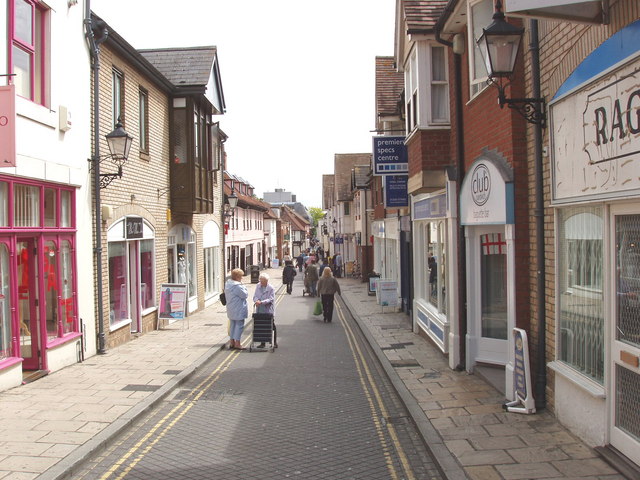
Sir Isaacs Walk, Colchester
© Copyright David Hawgood and
licensed for reuse under this Creative Commons Licence
Having just visited both Lancashire and Essex briefly, l have been thinking about what my grandmother must have experienced when she moved to Milnrow from Colchester in her mid twenties. Lancashire and Essex are physically very different. Essex, as a whole, is one of the driest regions in Britain, while Lancashire is one of the wettest. The area of Essex around Colchester is mostly flat and given over to agriculture. Towns and villages nestle among fields of peas, wheat and other crops.  Colchester, with its ancient castle, sits on a low hill, and gives the impression of being a comfortable market and garrison town.

Milnrow from the air in 1926


Milnrow, near Rochdale, is close to the border between Lancashire and Yorkshire, with the Pennines and Saddleworth moor as a backdrop. The stony hills produce sheep rather than crops. It was once a woollen weaving area, until the industrial revolution brought cotton spinning mills, drawn by the abundant supply of water and damp atmosphere. The cotton mills are all closed now, but in the 1920's, the chimneys of Milnrow's many operating mills would have been a prominent feature of the landscape.

Dale St, Milnrow
© Copyright David Dixon [under a CC licence], via Wikimedia Commons


Many of my grandfather's relatives worked in the mills. What did my grandmother make of their north country way of speaking and relating? What did they make of my grandmother, with her 'southern' accent and Salvation Army upbringing? Strangely, it had not occurred to me before I visited Essex that my grandmother would have had a different accent to those around her when she arrived in Milnrow. I don't remember her sounding 'different' when I knew her as a child, so perhaps she gradually took on the local accent. Or perhaps I just didn't notice.

She certainly left the Salvation Army to join the local C of E church, though whether willingly or in deference to my grandfather I don't know. As far as I'm aware she became part of the Milnrow community. But how different the culture and environment must have seemed when she first arrived. And how little we know or think about our  parents' and grandparents' background until it's too late to ask them.


Sunday, April 7, 2013

Mary Baines of Westmorland

Kirkby Lonsdale (now in Cumbria)
Photo: cc licensed ( BY NC ND ) flickr photo by Cheekablue:
http://flickr.com/photos/cheekablue/2769879983/

We know from the 1851 census that Mary Ward (nee Baines) was born in Kirkby Lonsdale in Westmorland. Her stated age in the 1841 and 1851 census suggest she was born about 1814-1815. This also tallies with her age given when she died. In the absence of records of any other person of the same name and approximate age, it seems likely that she was the daughter of James and Anne Baines (nee Preston) of Kirkby Lonsdale.

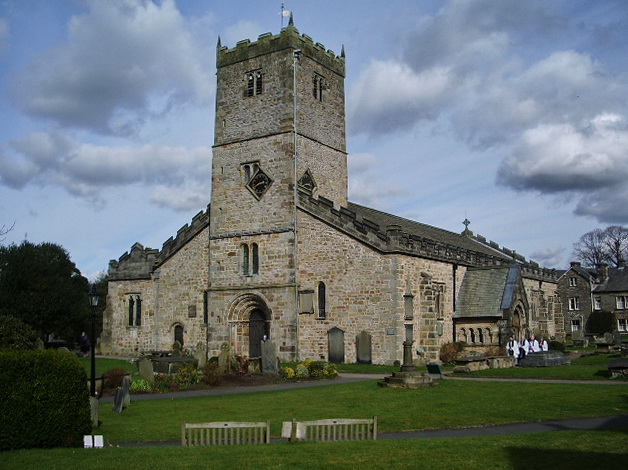
St Mary's church, Kirkby Lonsdale
Photo: A P Kapp via Wikimedia Commons


Mary and four of her siblings (George, Thomas, James and Anne) were all christened on the same day, 28 June 1818, at St Mary's church in Kirkby Lonsdale. This sort of family baptism en masse was apparently not uncommon in the past, and could mean that James and Anne had a rather itinerant lifestyle. Or it could simply be that a more diligent minister arrived in the village. Since births (as opposed to baptisms) were not registered before 1837, it's difficult to know in what order the siblings were born.

Another son of James and Anne Baines, Joseph, was baptised in Kirkby Lonsdale in November 1815. If this was the same family, it's strange that Mary was not baptised at the same time, unless she was born right at the end of 1815. There are also a couple of other earlier baptisms (William in 1796 and Diana, in Great Mitton, in 1798) that may have been children of the same family.

Mary's father appears to have died in Kirkby Lonsdale in 1827. Perhaps some of the family, including Mary, moved to Lancashire looking for work, or perhaps they had distant relatives there. It's not clear what happened to her mother, Anne. An Anne Baines, aged 72, was buried in Walton le Dale in 1845, but her name doesn't appear in the census four years earlier. This could be Mary's mother, but it could just as likely be one of several Anne Baines in the local area.

Mary married Richard Ward at St Leonard's church in Walton le Dale on June 26, 1831. If she really was born in 1815 or so, she would have been 16 years old. One of the two witnesses recorded on the parish register - James Tomlison snr - was a chapel clerk who witnessed many other weddings in the same church. The other, John Briggs, doesn't seem to be related to the family, as far as I've been able to discover.

In the next 20 years Mary gave birth to 9 children who lived long enough to be recorded and baptised. Given the strain this must have placed on her body, and the living conditions and health care available at the time, it's perhaps not surprising that, like many other women, Mary died at an early age. She was 38 and her youngest child only 18 months old when she was buried in 1852. (A quick count shows that of the 99 deaths recorded in Walton le Dale in 1852, only 1 in 3 were aged over 50).