Showing posts with label Milnrow. Show all posts

Thursday, May 2, 2019

Colchester, Essex

In this series of posts on places where my ancestors once lived, we now travel across many counties, from Lancashire in the north-west of England to Colchester, in the south-east.

Colchester is one of the oldest towns in Britain. It has had a military presence since the Twentieth Victorious Valeria Legion established a garrison there in 43 AD, during the Roman conquest of Britain under Emperor Claudius. For a while it was the capital of Roman-occupied England, despite the best efforts of Queen Boudica to see them off. Over the centuries other armies followed in making Colchester their base. One end of the main street is still dominated by the great Norman keep, and the later castle, built on the mound of a Roman temple.

By the end of the 18th century, several barracks had been built in Colchester to house troops and cavalry regiments coming and going from wars on the continent. Wounded men were also brought to the military hospital in Colchester to recover. The townspeople were used to seeing the population of infantry and officers in the barracks swell in times of war, followed by an emptying out in peace time.

But they had probably never experienced anything like the influx of soldiers that occurred with the outbreak of World War 1. Volunteers flooded in. Two hundred men arrived in Colchester each day, to be trained as part of "Kitchener's Army" before being sent to the battlefields of Europe and the Middle East. At times there were as many soldiers in the town as local residents. The barracks couldn't house them all, so they were put in huts and tents, or even billeted with families.

Thomas Henry Ward goes to Colchester


Thomas Henry Ward
(Photo courtesy of M. Lucas)
As the war dragged on, the number of volunteers dwindled and in 1916 conscription was introduced. It's not clear whether my grandfather, Thomas Henry Ward, joined up as a volunteer in 1914 or found himself conscripted later on. But whatever the case, he would have been in his early thirties when he travelled by train to Colchester, to join the Army Ordnance Corp.

He would no doubt have found the flat Essex countryside, with its broad fields of wheat and other crops, quite unfamiliar after living in the hilly moorlands of eastern Lancashire all his life, among the mills and factories. Colchester itself was a pleasant, prosperous-looking town, with hardly a mill or a smoke stack in sight.

Before the war, engineering works such as Paxman's, which made steam engines and boilers, were among the main employers in Colchester. They turned to making armaments during the war. The presence of the army also helped keep a brewery and bottling works in business. But Thomas, by all accounts, was not a great drinker. A rather quiet, perhaps even shy man, he was also older than many of the recruits around him.

The Beales family in Colchester


One Sunday afternoon (according to my father) Thomas was invited to have tea with a local family. The Beales were members of the Salvation Army, which had a strong presence in Colchester from the late 1880s, although it was not always well received. The family made it their ministry to look out for lonely-looking soldiers who were far from home

William and Eliza Beales had lived in Colchester all their adult lives. Except for Eliza's mother, Susan, who was from Australia, all their forebears came from villages around Colchester. Eliza's parents, David and Susan Whybrew, came to live near the Beales in Colchester after David retired from active service in the army.

Rosina Beales
The Beales' daughter Rosina, still in her late teens, may well have been dressed in her Salvation Army uniform when Thomas Henry, in his army uniform, met her for the first time over Sunday afternoon tea. Or perhaps not - family lore says nothing about what they were wearing. They would have had little time to get to know each other before Thomas went off with his battalion to serve overseas, but they evidently managed to keep their friendship going during the war.

In 1921, after Thomas was discharged from the army, they married at St Botolph's Anglican church in Colchester. It was then Rosina's turn to find herself in a strange environment when she and Thomas went back to his home village of Milnrow in Lancashire. She was leaving behind her Salvation Army roots as well as her childhood home in Essex.

Thomas Henry died several years before I was born, but my grandmother Rosina still lived in Milnrow when I was growing up. As a child I knew that she was born "down south" somewhere, and used to belong to the Salvation Army, but she seemed a natural part of what I called "home". It wasn't until I began researching my family's history that it occurred to me that Grandma Rosina must have undergone quite a cultural change when she married. How long did it take her to adjust? How did it affect her? Unfortunately I never had chance to ask her such questions.

Rosina's parents, William and Eliza Beales, continued living in Colchester for the rest of their lives, surrounded by children, grandchildren, and members of their wider family. Their role as officers in the Salvation Army and members of the Salvation Army band shaped their daily lives as much as their location.

In the next few posts I'll look at some of the Essex villages where the Beales and Whybrew families came from.


This series of 13 slides by Xav Marseilles shows what Colchester looked like 100 years ago, overlaid with more recent images. It appeared in the Daily Mail, 2 January 2017. (Click on the photo or the link above to see all the slides).


You can find out more about Susan and David Whybrew and their family, in my book Susan: convict's daughter, soldier's wife, nobody's fool, available on Amazon and other online books stores

Sunday, March 31, 2019

Milnrow

John Ward and his family left Rastrick in Yorkshire, sometime before 1901, and returned to Lancashire. They settled in Milnrow, not far from Littleborough, where they'd been living before they went to Yorkshire.

Handloom weaver working in a cottage
Cottage handloom weaver at work.
(Image from Wikimedia.org)
Milnrow, located in a valley on the River Beal, was similar to Littleborough in many ways. It had once been a quiet sheep-farming village, nestled in the foothills of the Pennines. Until the 19th century, local people produced woollen cloth in their own homes and sold it to the traders in Yorkshire. (Have a look at this video to see what was involved.)

Over time, fellmongering (processing sheep skins and hides) became an important industry and Milnrow was home to what was, reputedly, the largest fellmongering yard in England, owned by William Clegg Company. Tens of thousands of hides were brought in each week for processing.

Cotton milling, along with factory-based woollen milling, came to Milnrow in the early 19th century. The damp climate and ready access to coal to run the engines that powered the mills made this region ideal for cotton milling. Multi-storied brick edifices with tall chimneys dotted the landscape. Long rows of new houses went up, many of them built by the mill owners, to accommodate the workers. The railway line arrived in Milnrow in 1863. Originally part of the Butterworth township in the Rochdale parish, Milnrow gained its own Urban District Council in 1894. By 1901 the population had grown to about 10,000 people.

Tram car, Dale St, Milnrow, old photo (c 1910?)
Tram car in Dale Street, maybe c1910,
with one of the mills in the background*
John and Mary Ann Ward must have arrived during the 1890s, since they were there for the 1901 census. Were they simply born-and-bred Lancashire people yearning to be back in their own home county? Or did they have some other reason for moving to Milnrow? As is so often the case, I don't know the answer to that.

Their son Matthew, who had married in Rastrick in 1890, was already living in Milnrow when his wife Elizabeth gave birth to their second child, Annie, in June 1892. So it's possible that Matthew and Elizabeth moved to Milnrow first, and John, Mary Ann and the rest of the family followed.

The 1901 census suggests there were just as many cloggers and shoe makers in Milnrow as there had been in Littleborough, when John lived there in the 1880s. Despite this, he and his son Thomas (my grandfather) set up shop as cloggers in the main street, at 2 Dale Street. John's name appears at that address in the 1905 Kelly's Trade Directory. They apparently found enough work to keep the family settled in Milnrow. Various members of the family lived in the same house at 17 Clifton Street for at least four decades.
Corner of Dale Street, Milnrow, old photo
Dale St, Milnrow. This photo is from a later date,
but the Ward's shop must have been on this corner*.


St James parish church, Milnrow, old photo
St James parish church,
Milnrow*
When John died in 1905, Mary Ann and Thomas continued running the business, although they turned to repairing shoes and boots, as clog-wearing became less common. Despite some family disagreements, all of John and Mary Ann's children remained in Milnrow or its vicinity as adults. Many of their graves can be found in the graveyard around St James Church, including that of John, and Mary Ann, who died in 1916.

During World War 1, many men from Milnrow enlisted. The local war memorial shows that 144 of them never returned. John and Mary Ann's two older sons, John Willie and Matthew, were too old to join up. The youngest, Thomas, already in his thirties, probably thought he too would be overlooked. But he was enlisted, and sent to Mesopotamia as a member of the Royal Army Ordnance Corp. He did his training in Colchester, in Essex, which is where he met his future wife. That is where we will go to next in this series.

And since we are now leaving the clog-making Ward family of Lancashire, I thought I'd share this poem (in dialect) about clogs.
IT DIDN’T SEEM REET - Anon. 
Wen a fella cum walkin’ deawn eawr road,
‘Is clogs went "er—clatt, er—clatt."
An’ it struck mi, as Ah’d never knowed
A pair o’clogs t’seawnd like that.
Soo Ah waited wile ‘ee getten close,
Fer t’see wot wer th’matter,
Clogs doant "er—clatt, er—clatt" tha knows
Thi should guh "clatt—er, clatt—er!"
Ah thowt, "Just wen ‘as passes mi
Ah’ll ‘ev a looka’t’greawnd,
Cause Ah wer fair reet wonderin’
O’er th’reason feryon seawnd.
Sos wen ‘ee sad, "Nah then theer,"
Wen ‘ee passed mii’ th’ street,
Ah looked, an’ does ta know
Booath ‘is clogs wero’t’wrong feet.

*My thanks to Steve, owner of the wonderful Old Milnrow Pinterest board, for allowing me to use these photos.


Sunday, July 1, 2018

Why did Matthew spurn his family?

Equitable Street, Milnrow. Matthew and his family
 lived at number 33 in 1911.
Most of the unsolved mysteries from my family tree involve "what" "when" or "who" questions. What was the relationship between James Beales and William Beales? When was Richard Ward born? Who brought up Harriet Whybrew? They're questions that, at least in theory, could be answered by finding the right records (if they exist).

But sometimes the question behind a mystery is "Why?" Why did someone suddenly move across the country, or across the world? Why did a child named James apparently take the name of his dead brother William as an adult?

Most of the time, these questions are unanswerable. I can make a guess, based on learning more about a person's background, the social conditions, and local customs at the time. But I can never really be certain. The people who could tell me the answers are long gone.

One such unanswerable "why?" involves my father's Uncle Matthew (born November 1867). Matthew was born in Walton le Dale in Lancashire, but in the late 1870's his parents John and Mary Ward moved with their family to Littleborough. Then for a short while in the early 1890s they lived in Rastrick in Yorkshire. By the late 1890s the whole family had settled in the village of Milnrow in Lancashire, where John was a bootmaker and clogger. Most of the children remained there after they married and had families of their own.

For most of his adult life Matthew was employed as a fellmonger. Fellmongering is a process in which the wool is chemically separated from sheep hides, and was an industry for which Milnrow was noted. The wool was used by the woollen mills for weaving flannel, while the hides were tanned for leather.

Matthew met and married his wife, Elizabeth Ann Brown, while the Ward family were living in  Rastrick. They had six daughters, the first born in Rastrick and the other five in Milnrow. The youngest, Edith, a twin to Esther, died in her first year of life. The rest of the family all lived to a great age. Matthew and Elizabeth themselves, along with their two married daughters, Doris and Esther, all lived past eighty. Their unmarried daughters, Maud, Annie and Clara, all lived beyond ninety. Perhaps that in itself is a bit of a mystery, but not the one I'm coming to.

My father recounts that when he was about eight or nine years old, Matthew and his family suddenly stopped all interaction with the rest of the family. The rift was apparently never healed. For the rest of his life, Matthew's family had no contact with the rest of the family, even though they continued to live in the same small village. Or so my Dad remembers it. He was too young at the time to know what caused this disruption, though he thinks it involved some sort of argument.

I can't find anything in the records to suggest why Matthew and his family would have suddenly cut themselves off from the rest of the family at this time (around the end of the 1930's). Could there have been an argument over property? Or was it something more personal?

At the time of the 1939 Register (which is now online on both Ancestry and FindMyPast) Matthew had retired from work. The three unmarried daughters, Maud, Annie and Clara, all in their forties, were living with Matthew and Elizabeth in a house at 17 Buckley Hill Lane, which was practically "shouting distance" from other members of the family. They had been living there for at least eighteen years according to the electoral rolls.

Matthew's wife Elizabeth died in 1946 and Matthew himself died in March 1949, in Milnrow. He left his property to his daughters, who eventually all moved to Morecombe on the coast. None of them appears to have had any children. Unless something unexpected turns up, it seems unlikely that we'll ever find out what caused the family to separate from the wider family as they did.


Sunday, January 12, 2014

On this day in 1914

This year I thought it would be good to write some posts about the other side of my family tree, the Ortons and the Bentleys. Not that I've said everything there is to say about the Wards and the Beales, and I will keep adding posts about them, but my original intention was to cover the history of all four of my grandparent's families.

So as a sort of segue from one side of the family to the other, I thought it would be interesting to imagine what each of my four grandparents might have been doing 100 years ago today, on 12 January, 1914. It was a Monday and bitterly cold. (I like to think it was cold - we're having a heatwave here at the moment.)

Model T Ford c 1910
The first commercial airline flight had just taken place in the USA, and Henry Ford was about to open the first assembly line for Model T Fords. In England the Liberals were in power and George V was on the throne. Trouble was brewing in the far-away Balkans, the Suffragettes were becoming more and more militant, and there was industrial unrest. But the war that some were predicting was still 6 months away and unimaginable to most people.

Annie Kenney and
Christabel Pankhurst
The oldest of my grandparents, Thomas Henry Ward, would have been 31 years old. He was living with his widowed mother and his sister Fanny in the village of Milnrow, Lancashire. Perhaps his mother still owned the shoe retailing business in which he worked as a boot repairer, although by now she was over 70 years old. Thomas Henry's brothers and sisters were all married now apart from Fanny, and all were still living in and around Milnrow.

The 18 year old Rose Beales was probably working as a domestic servant with the Orsborn family in Ipswich, as she had been when the census was taken in 1911. Work as a domestic servant was the most common occupation for unmarried women at the time. Like her parents, the Orsborns were members of the Salvation Army. Their first daughter, Maria Evelina, was born in Colchester in 1910 so the two families no doubt knew each other. According to my father, Rosina was very much appreciated by her employers.

For the 10 year old Albert Edwin Orton in Pendleton, near Manchester, it would likely have been a school day. His father would have been at work at his gentleman's hairdressing shop, his older sister Edith May was working in a cotton mill and his brother Harold, 15, had probably also started work. His mother Sarah Jane may have been at home, or she too might have been working.

Gazette du Bon Ton
fashion plate 1914
Meanwhile the youngest of my four grandparents, the 9 year old (Margaret) Annie Bentley, was probably also at school. Home for her must have been a crowded, bustling place. According to the 1911 census, the family lived in a 3 room house. Along with her father, Walter Bentley, lived his three brothers-in-law, Albert, James and John Hough, his sister-in-law Lily Elizabeth Hough, Annie's brothers Walter (14) and Albert Bentley (5), and her sisters Alice (11) and Harriet (5). Annie's mother had died in 1909 and Lily acted as mother to the younger children.

While some were predicting war ahead, no-one could have forseen how drastically the coming years would change the lives of these individuals and the society in which they lived.

Sunday, October 6, 2013

Follow-on weddings

In a previous post I mentioned that Esther Lambert and Matthew Cragg seem to have been together at a wedding some time before their own marriage. Their names appear as the witnesses at the wedding of Grace Lambert and John Singleton in Preston in 1831. Esther and Matthew married two and a half years later in 1833.

This wasn't the only occasion when the witnesses at a family wedding were to marry each other. In October 1890 when Matthew and Esther's grandson Matthew Ward married Elizabeth Anne Brown in Rastrick, Yorkshire, the witnesses were Matthew's father John Ward, his brother John Willie, and John Willie's future wife Mary Hannah Butterworth.

John Willie and Mary Hannah married in Smallbridge, Lancashire, in March 1893. The witnesses at this wedding were John Willie's sister Esther, and Travis Kershaw. Five years later, in March 1898, Esther and Travis were married in Milnrow.

If nothing else, the timing of these 'follow on' weddings suggest that the couples knew each other for quite a while before they married. But that's not so surprising given that many people in the past married someone from the same village as themselves. It would be interesting to know if the same thing happened in any of the marriages on the Beales side of the family, but I don't have enough details about these marriages to know who the witnesses were.


Saturday, July 13, 2013

John Ward, clogger

Clogger's tools
cc licensed ( BY NC ND ) flickr photo shared by Kevin Harber
John Ward (1842-1905) was a "clogger". In other words, he made the tough wooden-soled, metal-tipped lace-up clogs worn by labourers and mill workers all over Britain during the 19th and early 20th century.

Some cloggers were itinerant, but most villages had one or more resident clog-makers who made clogs on order, individually fitted to the buyer's feet. The traditional village clogger usually carved the wooden soles themselves, before cutting the leather uppers and nailing them in place. A well made pair of clogs was waterproof and would last for years.

John possibly learned some of his trade in Walton le Dale from his father Richard, who was a bootmaker. He continued as a clogger when he moved to Littleborough, then to Rastrick and finally to Milnrow. Whether he worked from home (as in the picture below) or had a workshop elsewhere I've yet to discover.

Clogger's Shop in Weaver's Cottage Museum - geograph.org.uk - 528761
Clogger's shop in a weaver's cottage museum


More information about English clog making:


The Last Clog Maker in England - series of YouTube videos on clogs and clog making by Jeremy Atkinson

Informative website by Chris Brady

Clogs (Mike Cahill, maker and repairer of traditional English clogs)


Thursday, June 20, 2013

Mary Ann Cragg

When Mary Ann Cragg married “the boy next door”, John Ward, she was twenty years old and he was 22. Her parents, Matthew and Esther Cragg had moved to Walton le Dale sometime between 1851 and 1861 and took up residence as neighbours to the widowed Richard Ward and his son John in Mansleys Row. Both Mary and her father worked in the cotton mills, he as a block printer and she as a cotton loom weaver. The marriage entry in the church register lists her as 'Mary Craig' daughter of Matthew Craig, but this is almost certainly an error. The mother's maiden name for their children, where it is recorded, is Cragg.

http://www.geocities.com/radcliffeuk/misc/rad-bridge.jpg
Radcliffe Bridge about 1854
Photo taken by William Smith
Mary Ann was born in Radcliffe, near Bury in Lancashire, on December 21, 1843. She had two older brothers, William (born 1835) and Richard (born 1839). Tragically, both boys died within a few days of each other in February 1847. Perhaps they were victims of the typhus epidemic which swept through Britain that year, hitting Lancashire particularly hard, with nearly 10,000 deaths recorded in the Northwest. If so, three year old Mary was very fortunate to have survived. Perhaps it is an indication of her strong constitution.

Following her brothers' deaths, Mary Ann seems to have remained the only child of Matthew and Esther.  But she was not always alone with them. The 1851 census shows that Matthew, Esther and Mary were still living in Radcliffe, though they had moved from Cabbage Row to Radcliffe Hall. Living with them were a nephew and niece, William and Mary Newsham. They were much older than Mary, and were already working.

By 1861 they had left, but a 9 year old child named Nancy Heap was living with Matthew, Esther and Mary. She is described as a niece, but as far as I can tell she was probably the daughter of Mary Newsham. (More of these connections in a later post).

Lower Newlands, Rastrick, Yorkshire
Photo  copyright Humphry Bolton under a CC license
After her marriage to John Ward in June 1864, Mary Ann continued to work as a cotton weaver, even after the birth of John Willie, Matthew and Esther. According to the 1911 census, she and John went on to have 10 children in all, 7 of whom lived into adulthood. The family moved from Walton le Dale to Brighouse near Calderbrook before 1881, then to Rastrick in Yorkshire, and finally by 1901 to Clifton Street in Milnrow, Lancashire. Later in life, after John’s death in 1905, she continued his business as a boot and shoe retailer until her own death in 1916.

Tuesday, May 28, 2013

From Essex to Lancashire in 1921

In January 1921 my grandmother, Rosina Beales, married my grandfather, Thomas Henry Ward, a returned soldier nearly twelve years her senior. Soon after the wedding, which took place in her home town of Colchester in Essex, they  moved to his home in Milnrow, Lancashire. And there my grandmother stayed for the rest of her life (except for occasional holidays) as a wife and mother and  later as a widow.

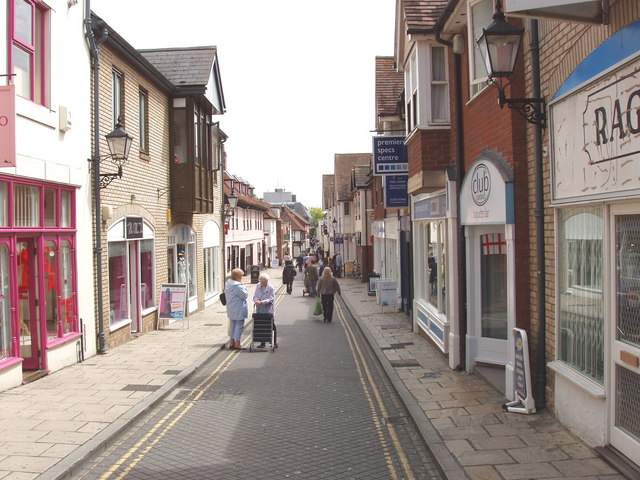
Sir Isaacs Walk, Colchester
© Copyright David Hawgood and
licensed for reuse under this Creative Commons Licence
Having just visited both Lancashire and Essex briefly, l have been thinking about what my grandmother must have experienced when she moved to Milnrow from Colchester in her mid twenties. Lancashire and Essex are physically very different. Essex, as a whole, is one of the driest regions in Britain, while Lancashire is one of the wettest. The area of Essex around Colchester is mostly flat and given over to agriculture. Towns and villages nestle among fields of peas, wheat and other crops.  Colchester, with its ancient castle, sits on a low hill, and gives the impression of being a comfortable market and garrison town.

Milnrow from the air in 1926


Milnrow, near Rochdale, is close to the border between Lancashire and Yorkshire, with the Pennines and Saddleworth moor as a backdrop. The stony hills produce sheep rather than crops. It was once a woollen weaving area, until the industrial revolution brought cotton spinning mills, drawn by the abundant supply of water and damp atmosphere. The cotton mills are all closed now, but in the 1920's, the chimneys of Milnrow's many operating mills would have been a prominent feature of the landscape.

Dale St, Milnrow
© Copyright David Dixon [under a CC licence], via Wikimedia Commons


Many of my grandfather's relatives worked in the mills. What did my grandmother make of their north country way of speaking and relating? What did they make of my grandmother, with her 'southern' accent and Salvation Army upbringing? Strangely, it had not occurred to me before I visited Essex that my grandmother would have had a different accent to those around her when she arrived in Milnrow. I don't remember her sounding 'different' when I knew her as a child, so perhaps she gradually took on the local accent. Or perhaps I just didn't notice.

She certainly left the Salvation Army to join the local C of E church, though whether willingly or in deference to my grandfather I don't know. As far as I'm aware she became part of the Milnrow community. But how different the culture and environment must have seemed when she first arrived. And how little we know or think about our  parents' and grandparents' background until it's too late to ask them.


Wednesday, December 5, 2012

At last - a regiment for Thomas Henry Ward

Over the past couple of years I've searched through the military records on Ancestry umpteen times, looking for some clue as to which regiment Thomas Henry Ward belonged to during his army service in World War 1. I found dozens of Thomas H Wards, and hundreds more plain Thomas Wards, but none of the records I looked at had enough information to identify them as the correct Thomas. Even knowing that he served in Mesopotamia and India didn't help.

Obverse of the
Victory medal
But this week I came across a card in the Medal Rolls Index for a Thomas Henry Ward who served in the Army Ordnance Corps (AOC). And there on the back of the card was an address (which is fairly unusual on such cards) - 17 Clifton St, Milnrow. So, now I know his regiment! What I don't know is how I missed seeing the  address on the card before. Perhaps I overlooked it, although it's quite clear. The card doesn't come up using Milnrow as a keyword or place of residence.

The Medal Rolls Index contains millions of cards. Almost every soldier who served overseas in World War 1 was awarded some sort of medal, often more than one. Each soldier had an Index card on which the army listed what medals they were entitled to, along with details such as their regiment(s) and regimental numbers, where they served and so on. Most cards contain very few details.

Reverse of the
Victory medal
The Index card for Thomas Henry Ward shows that he was a private in the Army Ordnance Corps (which became the RAOC from 1918), regimental number 029248 (1). He was awarded a Victory medal (not to be confused with the Victoria Cross!) and the British War medal. The Great War website gives details about these medals.

There is also an entry for the GSM - General Service Medal - with a clasp for service in NW Persia. Then for some reason the reference to the GSM has been crossed out and the word "ineligible" added, but leaving the words about the clasp for NW Persia intact. The GSM was usually awarded for service beyond 1918, with clasps for various campaigns such as the one in North West Persia in 1920. The clasp was never awarded without a medal. I'm still trying to decipher from the various handwritten notes and numbers whether Granddad received the GSM and clasp or not.

On the back of the card is a reference to Hilsea, near Portsmouth, which was an RAOC depot  from 1918 and their barracks from 1921. This is followed by more letters and numbers which I've yet to decipher, and then "3.11.23 GSM clasp". I think the reference to 1923 is the date on which the medal was awarded or delivered. Below that is the Milnrow address. So overall it looks possible that Granddad was not demobbed in 1918 but continued on in the army until at least 1920.

(1)Unfortunately I don't think the copyright rules allow me to put up a picture of the card itself, but I can send a link if anyone wants it. 


Wednesday, June 27, 2012

Thomas Henry Ward


Name:
Thomas Henry WARD
Sex:
Male
Father:
John WARD (1842-1905)
Mother:
Mary Ann CRAGG (1843-1916)


Individual Facts
Birth
27 Dec 1882
Littleborough, Lancashire1–2
Residence
1891 (about age 9)
Lower Newlands, Rastrick, Yorkshire1
Occupation
1901 (about age 19)
Clog maker; Milnrow, Lancashire3
Census
1901 (about age 19)
17 Clifton St, Milnrow4
Occupation
1911 (about age 29)
Boot repairer; 17 Clifton St, Milnrow5
Census
Apr 1911 (about age 28)
17 Clifton St, Milnrow5
Death
1952 (about age 70)
Milnrow, Lancashire6


Marriages/Children
1. Rosina BEALES (1895-1972)
Marriage
1921 (about age 39)
Colchester, Essex7
Children
4


        1. 1891 census (UK).
        2. Lancashire bmd online.
        3. 1901 census (UK).
        4. 1901 census (UK), RG 13/3831.
        5. 1911 census (UK).
        6. familysearch.org.
        7. freebmd.org.uk.

More about Thomas Henry Ward:
Rememberance Day - Thomas Henry Ward
At last - a regiment for Thomas Henry Ward

Rosina Beales


Name:
Rosina BEALES
Sex:
Female
Father:
William James BEALES (1868-1945)
Mother:
Elizabeth WHYBREW (1869-1949)


Individual Facts
Birth
11 Feb 1895
Colchester, Essex1–3
Census
1901 (about age 6)
16 Albion Grove, Colchester1
Census
1911 (about age 16)
54 Spring Rd, Ipswich4
Occupation
1911 (about age 16)
Domestic servant; Ipswich, Suffolk4
Death
1972 (about age 77)
Rochdale, Greater Manchester2


Marriages/Children
1. Thomas Henry WARD (1882-1952)
Children 4


        1. 1901 census (UK).
        2. familysearch.org.
        3. freebmd.org.uk.
        4. 1911 census (UK).

More about Rosina Beales:
From Essex to Lancashire

Friday, April 13, 2012

Mary Ann Cragg


Name:
Mary Ann CRAGG
Sex:
Female
Father:
Matthew CRAGG (1810-1878)
Mother:
Esther LAMBERT (1807-1887)


Individual Facts
Birth
21 Dec 1843
Radcliffe, near Bury, Lancashire1–2
Census
1851 (about age 8)
Radcliffe Hall, Radcliffe, near Bury, Lancashire3
Occupation
1861 (about age 18)
Cotton powerloom weaver; Walton le Dale, Lancashire4
Census
1861 (about age 18)
4 Mansleys Row, Walton le dale5
Census
1881 (about age 38)
Crabtree St, Blatchinworth with Calderbrook6
Census
1891 (about age 48)
Lower Newlands, Rastrick Yorkshire7
Census
1901 (about age 58)
17 Clifton St, Milnrow8
Census
1911 (about age 68)
17 Clifton St, Milnrow9
Occupation
1911 (about age 68)
Boot and shoe retailer; Milnrow, Lancashire9
Death
1916 (about age 73)
Rochdale, Greater Manchester1,10


Marriages/Children
1. John WARD (1842-1905)
Children
John Willie WARD (1865-1946)

Matthew WARD (1867-1949)

Esther WARD (1870-    )

Richard WARD (1872-1879)

Edward WARD (1874-    )

Mary Ann WARD (1877-1879)

Fanny WARD (1879-1956)

Thomas Henry WARD (1882-1952)

Henrietta WARD (1886-1937)

More about Mary Ann Cragg:
Mary Ann Cragg
Happy and sad family events in Littleborough


Footnotes:
        1. freebmd.org.uk.
        2. Lancashire Online Parish Clerk project.
        3. 1851 census (UK), HO 107/2216 folio 42(?) p 166(?).
        4. 1861 census (UK).
        5. 1861 census (UK), RG 9/3140 folio ? p 14.
        6. 1881 census (UK), RG 11/4120 folio 36 p 20.
        7. 1891 census (UK), RG 12/3581 folio ? p 34?.
        8. 1901 census (UK), RG 13/3831 folio 106 p 9.
        9. 1911 census (UK).
        10. Lancashire bmd online.

John Ward (1842)


Name:
John WARD
Sex:
Male
Father:
Richard WARD (1809-1881)
Mother:
Mary BAINES (1815-1852)


Individual Facts
Birth
1842
Walton le Dale, Lancashire1–4
Census
1861 (about age 19)
2 Mansleys  Row, Walton le dale5
Occupation
1861 (about age 19)
Cloggers apprentice; Walton le Dale, Lancashire5
Census
1881 (about age 39)
Crabtree St, Littleborough, Blatchinworth with Calderbrook6
Census
1891 (about age 49)
Lower Newlands, Rastrick, Yorkshire1
Occupation
1891 (about age 49)
B  Clogger; Rastrick Yorkshire1
Death
1905 (about age 63)
Milnrow, Lancashire7


Marriages/Children
1. Mary Ann CRAGG (1843-1916)
Children
John Willie WARD (1865-1946)

Matthew WARD (1867-1949)

Esther WARD (1870-    )

Richard WARD (1872-1879)

Edward WARD (1874-    )

??Mary Ann WARD (1877-1879)

Fanny WARD (1879-1956)

Thomas Henry WARD (1882-1952)

Henrietta WARD (1886-1937)


        1. 1891 census (UK).
        2. 1901 census (UK).
        3. Lancashire bmd online.
        4. Lancashire Online Parish Clerk project.
        5. 1861 census (UK).
        6. 1881 census (UK), RG11; Piece: 4120; Folio: 36; Page: 21.
        7. freebmd.org.uk.

More about John Ward:

John Ward's siblings
Happy and sad family events in Littleborough
John Ward, clogger